
We Were Never Meant to Do This Alone: September’s Call to Care
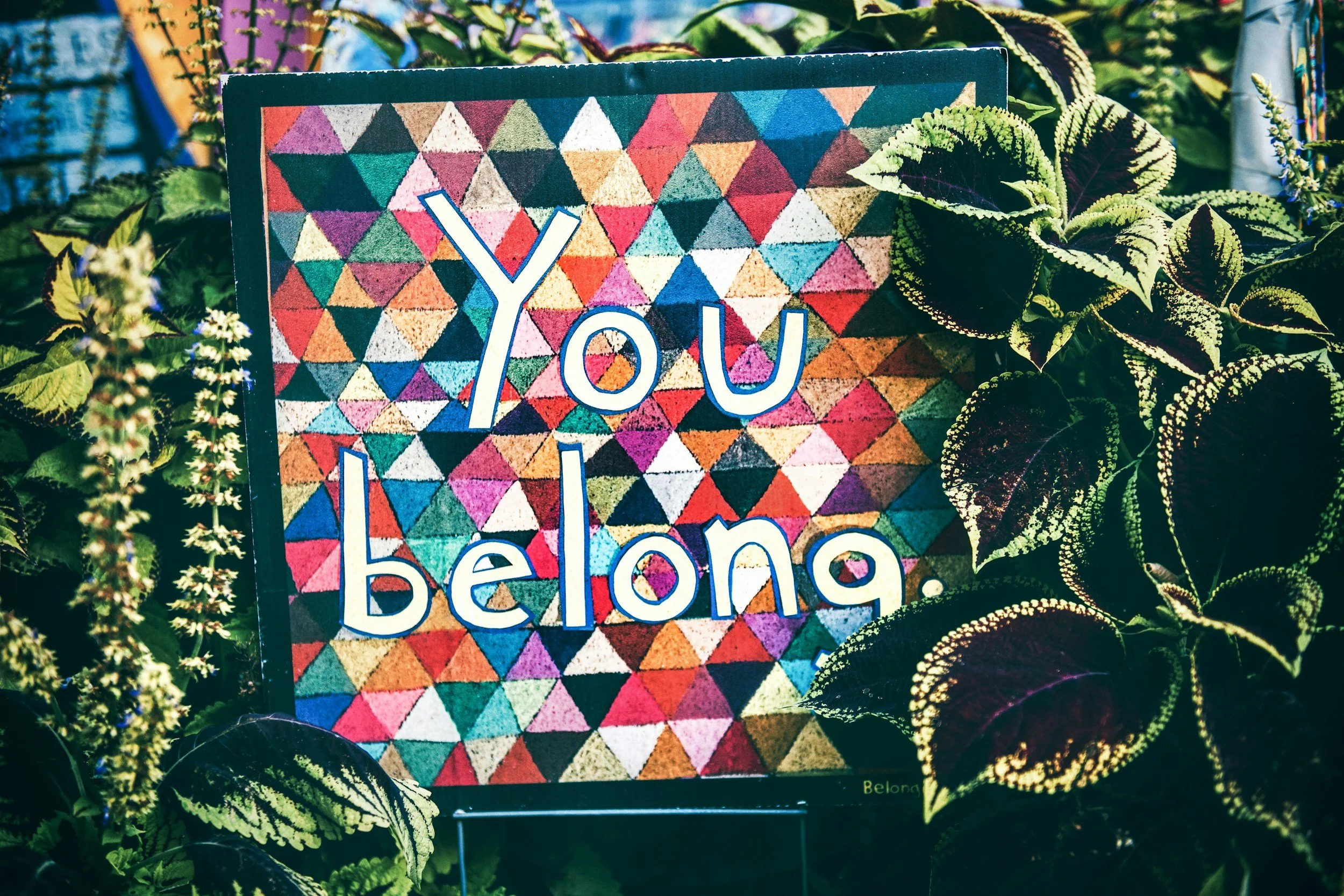
Multicolored yard poster with "You belong" text, surrounded by green plants.
September is Suicide Prevention Month, National Recovery Month, and Pain Awareness Month. These are three observances that, on the surface, might look unrelated. One is about crises. One is about healing from mental health and addiction struggles. One is about chronic physical pain. But sit with them for a moment, and a single thread emerges:
Each one is about what happens when suffering goes unseen, unspoken, or unsupported.
That thread matters. Whether someone is in the grip of suicidal despair, rebuilding their life after addiction, or living with the pain that never fully goes away, the experience is often the same — a deep, human need for a felt sense of belonging. To be witnessed. To not have to carry it alone.
The Belonging We’re Missing
When we suffer in isolation, that isolation doesn’t just feel bad. It compounds the suffering itself. When the suffering is not acknowledged, we learn to hide our pain because we’re afraid of being burdened, judged, or misunderstood. This isolation goes against our biological and psychological needs. Humans are wired for connection. We are not made to suffer alone, yet, so many of us do because we’ve learned to believe we shouldn’t need it. We start confusing our needs as the threat because the suffering feels like it costs us. So, we have difficulty accepting help, connecting with our community, and accepting support.
When people feel deeply connected and believe others need them, value them, and would miss them, suicidal ideation is less likely to escalate into lethal intent. (This is why isolation is one of the most consistently identified risk factors in psychological autopsies.)
In addiction recovery, belonging counters shame and isolation. Strong social support increases the “cost” of relapse when you have people to be accountable to and people who’d notice. (This is why AA/NA, peer-based recovery support, and mutual support organizations are beneficial in recovery and after care even after the clinical treatment has ended.)
Felt social support enhances chronic pain management. A sense of belonging through social networks and support groups helps reduce isolation, encourages positive coping strategies, and can increase motivation and engagement in pain management and health-conscious behaviors. People benefit from connecting with other people who truly understand the lived experience and can validate the “invisible” impairments or nature of the pain. A global sense of belonging is heavily associated with increased confidence in the ability to manage pain symptoms and function despite their pain — benefiting their quality of life.
Belonging shows up as a protective factor across suicide prevention, addiction recovery, and chronic pain management. This type of social support changes the underlying mechanics of risk. Suicidal despair, addiction, and chronic pain all tend to thrive in secrecy and shame, and grow heavier in silence. The weight gets a little lighter in the presence of someone who says, “I see you. You don’t have to explain or justify this. I’m here and not going anywhere. You are not alone.”
Where Belonging and Care Collides with “Productive” and “Efficient” Culture
Intentional practice and design for more care and belonging in our environments takes time, presence, and attention. What happens when what is needed most collides with the systems that reward productivity and efficiency?
Here’s where belonging and care gets harder, especially for the high-achievers, caregivers, and people who have experience being dismissed or marginalized: we navigate environments, workplaces, families, and even our own inner monologue that often reward output over honesty, and performance over presence.
In cultures that prize productivity and perfectionism, pain gets scheduled around. Recovery gets rushed. Struggling becomes something to manage quietly so it doesn’t “disrupt” work or relationships. People learn to question their competency, adequacy, and worth before ever asking, “Am I okay?” or “What do I need?”
This isn’t a personal failing, but a systemic one. When environments equate worth with output, they teach people to disconnect from their own needs and values in order to keep functioning. Over time, that disconnection becomes draining and dangerous. It’s how someone can be drowning and still show up to every meeting. It’s how pain, addiction, and despair get missed — not because people don’t care, but because the culture doesn’t normalize and socialize the values of belonging, safety, and care. The impact of this disconnection spreads deep and wide across systems that include workplace cultures, communities, and relationships.
Awareness as a Bridge
Raising awareness isn’t just about statistics, swag, or hashtags. It’s about interrupting the silence long enough for someone to feel safe enough to speak and trust that it’s worthwhile to ask for help. It’s about naming the struggle out loud and humanizing the experience in a way that does not shame or guilt.
Spreading hope means holding space for what improvement is possible even when the moment doesn’t feel that way. Recovery is possible. Pain can be managed and supported, even when it can’t be cured. Suicidal crises can pass, especially when someone doesn’t have to face them alone.
Centering care means creating environments at home, work, in our relationships where wellbeing and a sense of belonging isn’t something people have to earn by “being enough” in their productivity, composure, or level of functioning.
We raise awareness and leverage it to bridge us to a culture of care in our schools, workplaces, and communities. When our environments cultivate belonging, there is a felt sense that people matter. You matter. Trust deepens, resilience grows, collaboration and conflict is easier to navigate, and there is cohesiveness and shared purpose.
Belonging in action is a practice and intentional design that looks and feels like where we hope to be in the future. The future of care and belonging is about how we show up for each other, how we reduce loneliness and isolation, how we create the space for connection, and how we notice and listen to people.
An Invitation
If something in this piece landed for you, maybe you recognize yourself in the exhaustion of holding it together, the quiet weight of the pain, or the loneliness of a struggle. Please hear this:
You are not required to prove you deserve support before you ask for it. Belonging isn’t something you earn through performance. Care isn’t a reward for sacrificing your needs. You deserve belonging and care because you are human — you have inherent dignity and worth.
You don’t have to have a crisis to reach out. You don’t have to wait for things to “get bad enough” to matter. If you or someone you love is struggling, you don’t have to figure it out alone. Reach out to a trusted person, a support group, or a mental health professional. If you are in crisis right now, call or text 988, the 988 Suicide & Crisis Lifeline is available 24/7.
If you are a leader in your workplace, I invite you to commit to one action this month that helps foster care and belonging:
Create opportunities to connect with those you lead
Create space for colleagues to connect across departments and levels of leadership
Facilitate conversations across teams
Lead by example in normalizing and socializing humility and help-seeking
Recognize people for their contributions
Celebrate acts of courage and vulnerability — especially when attempts to try something new fails
This September, let’s do less performing and more connecting.
Less silence and more presence.
Less criticism and more care.
If this resonated with you and you’re looking for support or looking to improve workplace wellbeing and belonging, I’d love to connect.
I’m Andi Phillips, a licensed clinical social worker with nearly two decades of experience across education, community, and health care settings including over ten years in federal health care leadership. Before starting Desired Futures in 2025, I served as the first social worker Chief Well-being Officer for the federal government, leading innovative strategies aligned with the Reduce Employee Burnout and Optimize Organizational Thriving (REBOOT), a nationwide initiative to develop and implement interventions to reduce burnout among federal health care workers. Today, I am helping organizations transform workplace culture and organizational health to create desired futures rooted in care, creativity, and connection. I also provide therapy to individuals and couples in Illinois who identify as high-achieving professionals, LGBTQ, or neurodivergent who may be struggling with mental health, identity, relationships, or work/life balance and are seeking clarity, confidence, and sense of purpose. You can learn more about my work at Desired Futures Counseling & Consulting.
